The Benalmádena Stupa: A Guide to Visiting the Buddhist Heart of the Costa del Sol
Table of Contents
If you happen to be walking through the hills of Benalmádena and suddenly think you see a piece of the Himalayas overlooking the Mediterranean, it’s not a mirage. You’ve found the Enlightenment Stupa, a monument that is much more than a spectacular building: it is a beacon of peace and the largest Buddhist temple in the Western world.
This place is, without a doubt, one of the most special and surprising gems in the province of Málaga. In this complete guide, you will discover why it is so important, what it symbolizes, and, above all, how you can visit it to have an unforgettable experience while respecting its sacred essence.
A Beacon of Peace with Sea Views: What is the Enlightenment Stupa?
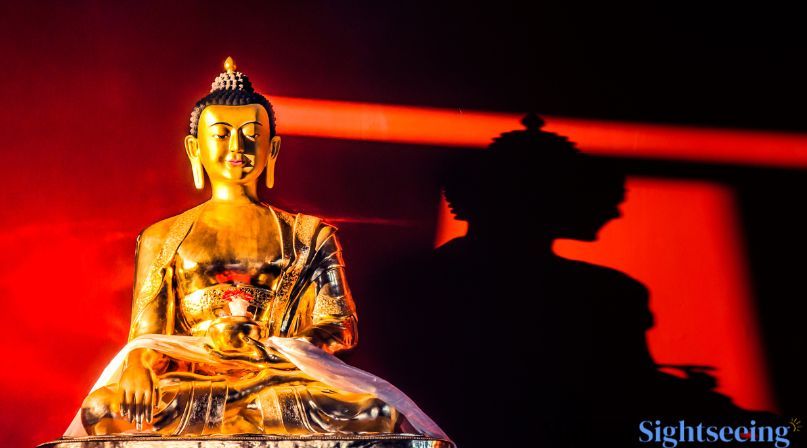
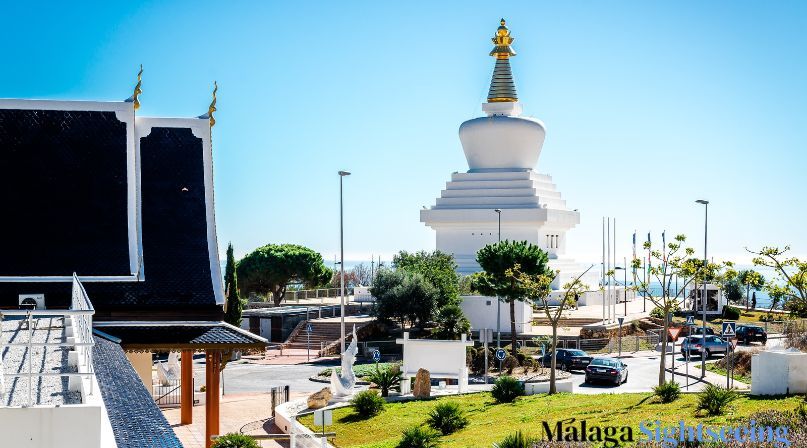
Inaugurated in 2003, the Enlightenment Stupa is not a simple building. It is a sacred Buddhist monument that symbolizes peace, prosperity, and harmony in the world. Standing at an impressive 33 meters (108 feet) high, it not only dominates the landscape but also holds the title of the largest stupa in the Western world.
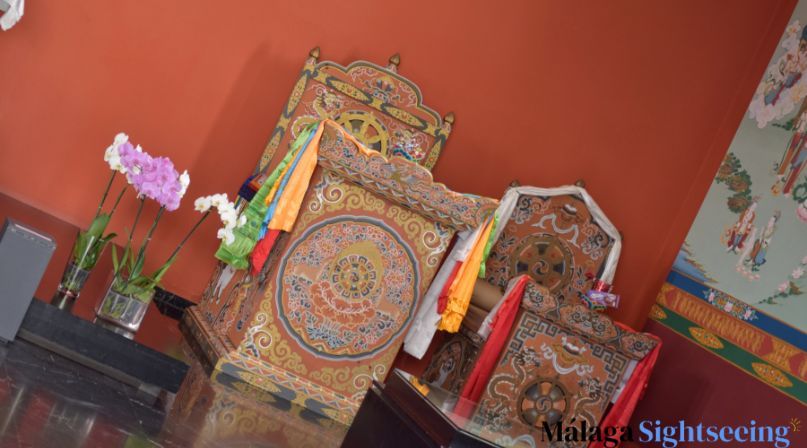
Unlike most stupas, which are solid, sealed structures, the one in Benalmádena has a feature that makes it unique: it houses a meditation hall of over 100 square meters inside. This turns it into a living space, a place for spiritual practice and gathering that is open to everyone.
Its construction was led by the great Buddhist master Lopon Tsechu Rinpoche, who saw this corner of the Costa del Sol as the perfect place to erect a symbol of peace. Its location is no accident: it stands on a natural vantage point offering spectacular panoramic views of the coast, blending ancient spirituality with the light and breeze of the Mediterranean.
The Hidden Meaning in its Architecture
Every element of the stupa holds a deep symbolic meaning, representing the path to enlightenment—the state of mind of the Buddha. Broadly speaking:
- The square base: Represents the earth and the ethical foundation of a practitioner.
- The dome (or “vase”): Symbolizes the element of water and equanimity.
- The conical spire with 13 rings: Represents fire, which consumes ignorance, and symbolizes wisdom.
- The parasol and the moon/sun: Symbolize air, compassion, and the fully enlightened mind.
Walking around the stupa is a meditative practice in itself. Tradition dictates that you should always walk around it in a clockwise direction, while cultivating positive thoughts or making wishes. It is believed that the powerful energy of the monument amplifies them.

A Practical Guide for Your Visit: Everything You Need to Know
Visiting the stupa is an enriching experience, whether you practice Buddhism or are simply seeking a moment of calm and beauty. To make your visit perfect, here is all the practical information you will find useful.
Respect and Etiquette: How to Behave in a Sacred Place 🙏
It is essential to remember that you are entering a place of worship and meditation. Acting with respect ensures a positive experience for you and for others.
- Maintain silence: Speak softly and avoid unnecessary noise. It is a space designed for introspection.
- Dress appropriately: No strict dress code is enforced, but respectful attire is appreciated. Avoid beachwear, low-cut tank tops, or overly short shorts.
- Remove your shoes to enter: To access the meditation hall inside, you must take off your shoes. There is a designated area to leave them comfortably at the entrance.
- Circle in a clockwise direction: When walking around the exterior, always circle the stupa in a clockwise direction.
- Photos are okay, but be considerate: You can take pictures outside without any problem. Inside, be discreet, do not use a flash, and avoid taking direct photos of people who are meditating.
Activities and Meditation
The Stupa is not just a monument to be admired, but a very active cultural and spiritual center.
- Guided Meditations: On Sunday afternoons (it is crucial to check the official website for the schedule), a guided meditation is held that is open to the public. It’s a fantastic opportunity to get a first taste of the practice.
- Lectures and Teachings: Buddhist masters regularly give talks on philosophy and meditation.
- Exhibitions: The lower level often hosts interesting exhibitions on Himalayan culture and Tibetan Buddhist art.
Opening Hours and Prices
- Visiting Hours: The Stupa is open from Tuesday to Sunday, usually with a break in the middle of the day. It is closed on Mondays. It is very important to check its official website before planning your visit, as hours can change.
- Price: Admission to the monument and the meditation hall is completely free. Voluntary donations are accepted to help with its maintenance. The exhibition on the lower level may have a small entrance fee.
How to Get to the Benalmádena Stupa
The Stupa is located in the Benalmádena Pueblo area, very close to the Butterfly Park of Benalmádena (Mariposario).
- By Car: This is the most convenient option. The address is “El Retamar, 29639, Benalmádena, Málaga.” There is a free parking lot right next to it, although it can get full on weekends.
- By Bus: Intercity bus lines that connect the coast (like those going to Mijas or Fuengirola) usually have a nearby stop called “Estupa Tibetana.”
The Enlightenment Stupa is much more than a tourist attraction. It is a haven of peace, a center for learning, and a wonderful example of how spirituality and beauty can flourish in the heart of the Costa del Sol. A visit that will undoubtedly recharge both body and soul.
Remember, you can find more information about what to see and do in Málaga in our free PDF guide: https://malagasightseeing.com/malaga-travel-guide-pdf/