Easter in Málaga, locally known as Semana Santa, is one of the most spectacular and deeply rooted traditions in Andalusia. The city transforms into an open-air stage where grand religious processions, heartfelt devotion, and cultural heritage blend to create an unforgettable experience. Whether you are a first-time visitor or a returning traveler, this guide will help you navigate the highlights, traditions, and practical aspects of celebrating Easter in Málaga.
Table of Contents
When is Easter in Malaga celebrated?
- 2025: April 13 – April 20
- 2026: March 29 – April 5
- 2027: March 21 – March 28
- 2028: April 9 – April 16
- 2029: March 25 – April 1
- 2030: April 14 – April 21
Historical Significance of Semana Santa in Málaga
The origins of Semana Santa in Málaga trace back to the Middle Ages, evolving over the centuries into today’s grand spectacle. A unique tradition exclusive to Málaga is the release of a prisoner during the “Jesús el Rico” procession on Holy Wednesday. This custom dates back to the reign of King Charles III, who granted the image of Jesús el Rico the privilege of releasing a prisoner each year as a reward for an act of faith during a time of crisis.
The Official Route
Although each brotherhood follows its own itinerary, all processions share an official route through some of Málaga’s most emblematic streets. This route ensures the processions pass through key historical and religious sites:
- Plaza de la Constitución
- Calle Larios (Main commercial street, where the best views can be found)
- Calle Martínez, Mercado Central – Atarazanas and Torregorda
- Alameda Principal
- Plaza de la Marina
- Calle Molina Lario, ending near the Cathedral and the Bishop’s Palace
For the best viewing experience, try to secure a spot early, especially along Calle Larios and Alameda Principal, where processions make their most iconic turns.

The Most Iconic Processions and Events
Each day of Semana Santa features distinct processions with unique highlights. Here are some of the most remarkable ones:
| Day | Brotherhood | Highlights |
|---|---|---|
| Palm Sunday | La Pollinica | Features children dressed as Nazarenes, symbolizing Christ’s arrival in Jerusalem. |
| Dulce Nombre | Known for its delicate, beautifully adorned float. | |
| Holy Monday | Crucifixion | A powerful depiction of Christ on the Cross. |
| Gitanos | Accompanied by spontaneous saetas (flamenco laments sung from balconies). | |
| Holy Tuesday | Estrella | Notable for its massive float, requiring over 250 bearers. |
| Holy Wednesday | Jesús el Rico | Features the historic prisoner release ceremony. |
| Maundy Thursday | Cena | One of the largest floats, depicting Christ’s final meal with his disciples. |
| Good Friday | Dolores de San Juan | Features a choral performance by nuns in Plaza de Arriola. |
| Easter Sunday | Resucitado | The final, most joyful procession, celebrating Christ’s resurrection. |
The Iconic Transfer of the Christ of the Good Death
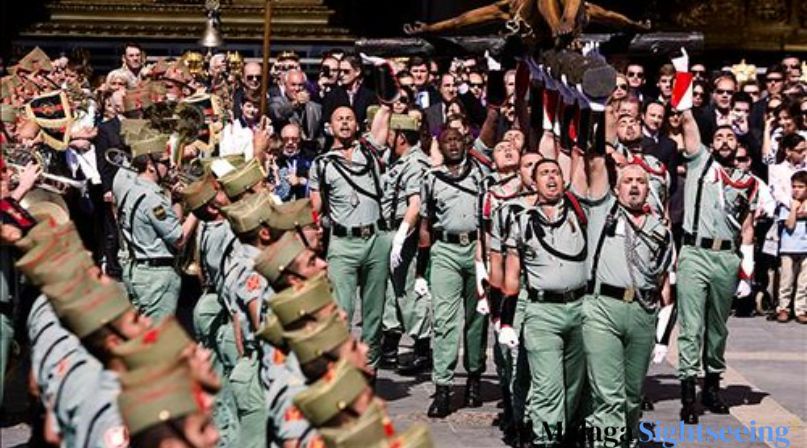
One of the most famous moments of Semana Santa in Málaga occurs on Holy Thursday, with the transfer of the Cristo de la Buena Muerte by La Legión (The Spanish Legion). The Legionnaires arrive by ship at Málaga’s port in the morning, march through the city, and later carry the image in a military-style ceremony. As they march, they sing El Novio de la Muerte, a deeply emotional moment for locals and visitors alike.
How Many Processions Are There?
During Semana Santa, Málaga hosts a total of 45 processions, distributed as follows:
- Palm Sunday: 8 processions
- Holy Monday: 9 processions
- Holy Tuesday: 6 processions
- Holy Wednesday: 7 processions
- Maundy Thursday: 7 processions
- Good Friday: 7 processions
- Easter Sunday: 1 procession
For exact itineraries and procession schedules, visit the official website of the Agrupación de Cofradías de Málaga: Visit website
Local Gastronomy During Semana Santa
Experiencing Semana Santa is not just about the processions; it is also a time to enjoy traditional Málaga Easter foods:
- Torrijas: Bread soaked in milk and honey, then fried to golden perfection.
- Pestiños: Deep-fried pastries glazed with honey.
- Buñuelos: Fried dough balls, sometimes filled with chocolate or cream.
- Potaje de Vigilia: A stew made of chickpeas, spinach, and salted cod.
- Bacalao: Salted cod prepared in various ways, a staple during Lent.
For an authentic taste, visit Casa Aranda for coffee and torrijas, or stop by El Pimpi to enjoy traditional Andalusian cuisine.
Tips for Visitors
To make the most of your Semana Santa experience, consider the following:
- Book accommodations early: Hotels fill up quickly, especially in the historic center.
- Arrive early to processions: The best spots fill up hours in advance.
- Dress appropriately: Modest clothing is recommended out of respect for religious traditions.
- Use public transport: Many roads are closed, so buses, the metro, or walking are the best options.
- Be aware of pickpockets: Large crowds attract petty thieves, so keep belongings secure.
- Respect local customs: Applause is common at the end of a procession, but silence is expected at certain moments.
Easter in Málaga is an unforgettable experience, blending faith, art, history, and tradition. Whether you come for the religious aspect, the cultural immersion, or simply to witness one of Spain’s most breathtaking events, Easter in Málaga offers a truly unique spectacle that captivates all who attend.
Remember, you can find more information about what to see and do in Málaga in our free PDF guide: https://malagasightseeing.com/malaga-travel-guide-pdf/